
CCTV System

CCTV surveillance provide intelligent safety & security

CCTV Security Systems offer unique advantages both before and after an incident occurs. These systems not only deter intrusions and prevent incidents but also assist in post-event analysis.

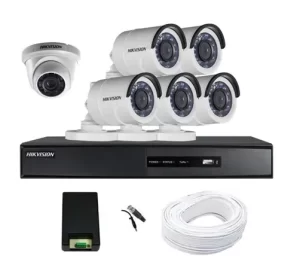
A basic CCTV system consists of three main components:

  • Cameras
    Signal transmission channels
  • Recording or live transmission stations

Basic Classification of CCTV Systems
Depending on technology, budget, and applications, the three components vary significantly. The camera’s performance is crucial, but equally important are the signal transmission channels and recording/live transmission stations. A poor communication system can degrade the overall performance of a CCTV system, regardless of camera quality.

Overview of CCTV Security System Components
Cameras: Cameras are broadly classified into IP Cameras and Analog Cameras.

  • Analog Cameras: These cameras provide video signals as continuous waveforms, which can be transmitted over considerable distances. However, analog signals are prone to significant attenuation, causing signal distortion over long distances. This means that even with high-resolution cameras, the picture quality at the monitoring station can be compromised.
  • IP Cameras: IP cameras deliver digital signals in the form of high and low pulses, eliminating signal distortion issues. These cameras can transmit signals over LAN/WAN networks or the internet, allowing access from PCs, mobile devices, and laptops. Recordings can be stored and analyzed without the need for proprietary recording devices.

Signal Transmission Channels: The choice of signal transmission channel depends on the type of camera used.

  • Analog Cameras: Use standard video cables for signal transmission.
  • IP Cameras: Use standard cables to carry digital signals. For long distances, optical fiber cables are used, converting electrical signals into optical signals with additional devices and accessories.

Recording or Live Transmission Stations:

  • Analog Cameras: Use DVRs (Digital Video Recorders) for recording and live viewing. The number of DVR channels corresponds to the number of cameras, but a single monitor is used for output.
  • IP Cameras: As cameras are networked, multiple viewing points can be set up by connecting monitors to the network. Recordings are stored on a network server, significantly reducing cabling since all devices connect through a single wire and network switches.

In summary, the effectiveness of a CCTV system relies not only on the quality of the cameras but also on the appropriateness of the signal transmission and recording setups. Each component plays a critical role in the system’s overall performance and utility.
Our Solutions

Quick Contact

Want to know more? It’s as easy.. Call Us on